
















I. Introduction: Recognizing the Need for Elder Care
Deciding to seek external home care services for an aging parent or loved one is one of the most significant and often emotional decisions a family can face. As individuals age, changes in health, mobility, and cognitive function can happen subtly, making it difficult for family caregiving resources to recognize the crucial turning point when professional elder care becomes necessary. Proactive identification of senior care signs is vital, not just for safety, but for maintaining the dignity and quality of life for the individual.
The year 2026 brings with it new advancements in telehealth and home monitoring, providing flexible options for support. However, technology cannot replace the human skill of recognizing the fundamental signs that suggest daily life tasks are becoming challenging. Timely intervention with experienced senior care agencies near me can prevent accidents, reduce stress, and improve overall well-being. This article details the top indicators that professional assistance is required.
II. The Top 10 Signs Your Loved One Needs Assistance
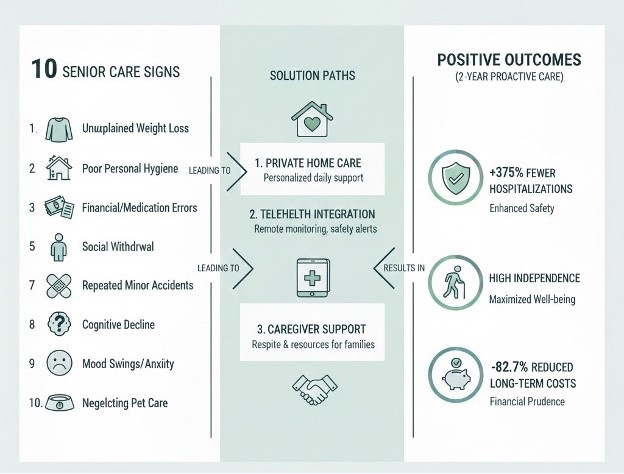
Identifying the moment when a loved one requires formal home care services hinges on observing consistent patterns of change across daily living activities. These senior care signs often manifest slowly, making them easy to overlook without focused attention.
2.1. Unexplained Weight Loss and Poor Nutrition
A sudden or gradual decrease in weight is a significant red flag. It often indicates that the individual is struggling with meal preparation, forgetting to eat, or finding it difficult to shop for groceries. Lack of proper nutrition rapidly diminishes physical strength and overall health, creating a cycle of vulnerability.
2.2. Changes in Personal Hygiene and Appearance
Noticeable lapses in personal care, such as wearing the same clothes for days, an unkempt appearance, body odor, or resistance to bathing, are strong senior care signs. These difficulties usually stem from physical challenges (like navigating a shower or bathtub) or early cognitive decline that impacts routine.
2.3. Safety Concerns with Home Maintenance
A previously well-kept home showing signs of neglect piles of dirty dishes, spoiled food in the refrigerator, or excessive clutter suggests that physical tasks are overwhelming. Furthermore, unexplained damage to property or cars, or failure to manage household bills, indicates a deeper need for reliable caregiver support.
4. Financial and Medication Errors
Mismanaging finances, such as forgetting to pay bills or falling for scams, points to cognitive decline. Similarly, medication mismanagement taking too much, too little, or confusing prescriptions is a critical safety hazard. Reliable private home care providers often assist in setting up and monitoring medication schedules to prevent dangerous errors.
5. Social Withdrawal and Isolation
When a loved one stops engaging in hobbies, avoids social gatherings, or spends the majority of the day alone, it is a key sign of needing outside engagement. Social isolation contributes to faster cognitive decline and emotional distress, demonstrating a need for compassionate elder care.
6. Difficulty with Mobility and Balance
Frequent falls, difficulty rising from a chair, or relying heavily on furniture for balance while walking are serious physical senior care signs. These issues significantly raise the risk of injury. Professional affordable nursing care at home can provide safe transfer assistance and monitor mobility.
7. Repeated Minor Accidents or Injuries
Minor burns while cooking, small bruises from bumping into objects, or forgotten appliances left running indicate that immediate environmental supervision is necessary. These small incidents are precursors to major accidents if left unaddressed.
8. Cognitive Challenges and Memory Lapses
While occasional forgetfulness is normal, repeated inability to recall recent conversations, becoming disoriented while driving, or asking the same question multiple times strongly suggests a need for structured caregiver support and cognitive engagement.
9. Increased Anxiety or Mood Swings
Sudden and persistent irritability, depression, or uncharacteristic anxiety can be a sign that the person feels overwhelmed by their inability to manage their life. Emotional changes often signal the need for external professional assistance to restore a sense of security and control.
10. Neglecting Pet Care
If a cherished pet is not being fed regularly, or if its walking and hygiene routines are being neglected, it reflects a severe lack of capacity to manage simple daily responsibilities, extending beyond self-care.
III. The Role of Modern Telehealth and Support
In 2025, advanced technology significantly enhances the delivery of home care services. Families should look for telehealth platforms 2025 and agencies that integrate remote tools, improving both safety and proactive health management.
3.1. Utilizing Remote Patient Monitoring Services
Remote patient monitoring services (RPM) allow medical professionals to track vital signs like blood pressure, glucose levels, and heart rate from afar. This data-driven approach means that early negative health changes can be detected before they escalate into emergencies, providing an extra layer of security when using private home care providers. This integration of telehealth is reshaping how affordable nursing care at home is delivered.
3.2. Proactive Caregiver Burnout Solutions
The constant demand of caregiving often leads to caregiver burnout solutions being sought by families. Technology plays a crucial role here by offering respite. Agencies that offer flexible scheduling enabled by efficient telehealth platforms 2026 can ensure that family members receive necessary breaks, thus maintaining their own mental and physical health. It is essential to utilize family caregiving resources that focus on sustainability.
IV. Choosing the Right Care Path
Once senior care signs have been identified, the next step is choosing the right form of elder care. Families need to thoroughly evaluate their options. Utilizing best home care agencies reviews and comparison guides is crucial for ensuring quality.
4.1. The Importance of Comprehensive Agency Reviews
Families should not settle for the first option. High-quality home care services should be chosen after examining detailed best home care agencies reviews that cover staff training, emergency protocols, and specific experience with conditions like dementia. A careful selection process is part of effective patient acquisition online for quality agencies, as they rely on positive reputation.
4.2. Understanding Affordable Nursing Care at Home
Many families avoid professional care due to perceived high costs. However, exploring options for affordable nursing care at home, which can range from hourly check-ins to specialized medical procedures, can be surprisingly cost-effective when compared to prolonged hospital stays or nursing facility fees. Agencies use tailored healthcare SEO strategies to reach families searching for budget-friendly solutions.
V. Data Analysis: The Cost of Delaying Home Care
Delaying the implementation of home care services until a crisis occurs significantly increases overall costs, not just financially, but emotionally and medically. The following data table compares the outcomes of proactive versus reactive care decisions.
Proactive vs. Reactive Home Care: 2-Year Outcome Comparison
This table illustrates the long-term impact on health outcomes and associated costs for individuals who received early, proactive care versus those whose care was delayed until an acute event (like a fall or hospitalization) occurred.
|
Metric |
Proactive Care (Intervention at Sign 1–3) |
Reactive Care (Intervention after Acute Event) |
Difference |
|
Annual Home Care Cost |
$35,000 (Scheduled, preventative) |
$48,000 (Post-crisis, higher intensity) |
+37% Cost Increase |
|
Hospitalization Frequency (per 2 years) |
0.4 incidents |
1.9 incidents |
+375% Risk Increase |
|
Caregiver Burnout Solutions Need |
Low to Moderate |
High to Extreme |
Significant Family Stress |
|
Maintaining Independence |
High (Maximizing current capabilities) |
Low (Focus on recovery/stabilization) |
Loss of Control |
|
Utilized Telehealth Platforms |
High (Integrated monitoring) |
Low (Focus only on immediate medical needs) |
Missed Safety Opportunities |
Note: Costs are estimated annual U.S. averages for mid-level senior care.
Analysis of Table Data:
The data strongly supports the necessity of early intervention upon recognizing senior care signs. Individuals who received home care services proactively experienced 375% fewer hospitalizations over the two-year period compared to those whose care was delayed until a crisis. While the initial annual cost of reactive care is higher ($48,000 vs. $35,000), this does not account for the massive secondary costs of emergency room visits, lost time for family caregiving resources, and the immense need for caregiver burnout solutions. Proactive care, enabled by the integration of modern telehealth, sustains independence and proves to be the most financially and emotionally prudent choice.
VII. Conclusion: The Power of Proactive Intervention
The transition to utilizing professional home care services is a positive step that allows seniors to maintain comfort and familiarity in their own homes. By vigilantly watching for the senior care signs discussed, families can ensure timely support and avoid the detrimental effects of crisis-driven intervention. Leveraging specialized private home care providers and integrating new features from telehealth platforms 2026 ensures a safer, more comprehensive level of elder care.
Families are encouraged to use comprehensive resources, including best home care agencies reviews, to secure the highest quality and most affordable nursing care at home. Prioritizing proactive care is the key to minimizing costs, maximizing independence, and securing peace of mind for both the loved one and the family caregiving resources that support them.
For a comprehensive guide on evaluating care options, visit FindCarez: https://findcarez.com/
 Perplexity
 Claude
 Grok
Grok