

















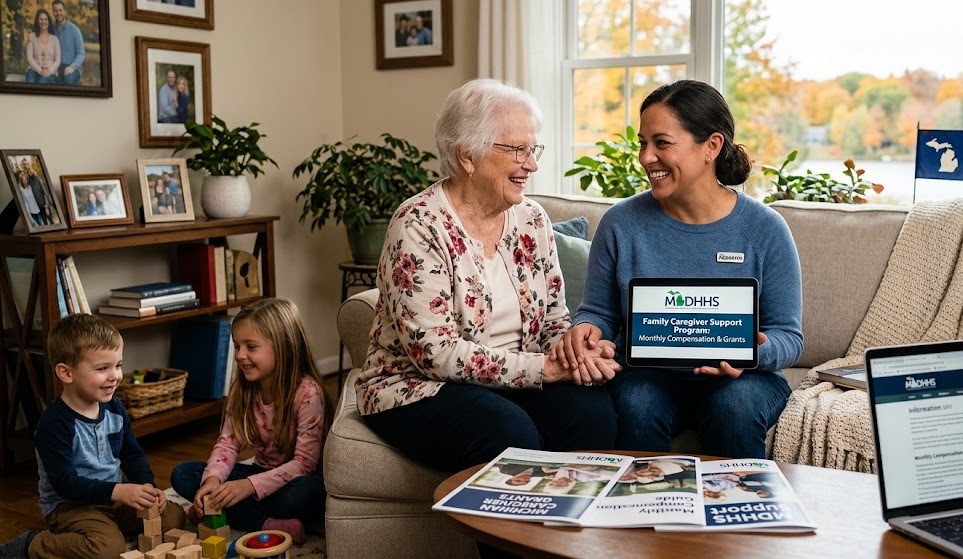
The landscape of senior care in the United States has undergone a massive transformation over the last decade. In the Great Lakes State, the push for aging in place has made the family caregiver grant in Michigan and various forms of monthly caregiver compensation central topics for thousands of households. As of 2024, Michigan stands as a leader in providing pathways for family members to receive financial recognition for the tireless work they do behind closed doors.
Whether you are looking for a senior caregiver near me or attempting to navigate the complexities of state funded programs to get paid for your services, understanding the legal and financial framework is essential. This article explores every available avenue in Michigan, backed by five year data trends and comprehensive resource mappings.
The Evolution of Caregiving in Michigan (2019–2024)
Over the past five years, Michigan’s elderly population has increased significantly. Statistics from the Michigan Department of Health and Human Services (MDHHS) indicate that the number of residents aged 65 and older has grown by nearly 15% since 2019. This demographic shift has created a vacuum in the professional care industry, leading the state to lean more heavily on family based care models.
In 2019, many families were unaware that they could qualify for a caregiver grant in Michigan. However, following the global health crisis of 2020, state policies were fast tracked to allow more flexibility in how Medicaid funds are distributed. Today, programs like the MI Choice Waiver and the Home Help Program are more accessible than ever, offering a lifeline to those who have sacrificed their professional careers to care for an aging parent or disabled relative.
Data Table 1: Michigan Caregiving Landscape and Growth Metrics
|
Year |
Senior Population (65+) |
Active Family Caregivers |
State Funding Allocated (Home Care) |
Average Hourly Rate (Medicaid) |
|
2019 |
1.68 million |
1.10 million |
$340 Million |
$11.50 - $13.00 |
|
2020 |
1.72 million |
1.15 million |
$395 Million |
$12.25 - $13.50 |
|
2021 |
1.76 million |
1.18 million |
$450 Million |
$13.50 - $14.50 |
|
2022 |
1.81 million |
1.21 million |
$510 Million |
$14.50 - $16.00 |
|
2023 |
1.85 million |
1.23 million |
$580 Million |
$15.50 - $17.50 |
|
2024 |
1.90 million |
1.25 million |
$640 Million |
$16.50 - $18.50 |
Understanding the Primary Financial Pathways
When we talk about a family caregiver grant in Michigan, we are actually discussing several distinct programs. There isn't one grant application but rather multiple entry points depending on the senior's health and financial status.
1. The Home Help Program (Medicaid)
The Home Help program is designed for individuals who are eligible for Medicaid and need assistance with at least one Activity of Daily Living (ADL). This program allows the seniors to hire a family member as their caregiver. The state pays the caregiver directly, providing steady monthly caregiver compensation.
This program has seen a surge in interest as caregiver jobs in Michigan have become more formalized. Families often find that becoming a state registered provider is more rewarding than working for an external agency.
2. The MI Choice Waiver Program
The MI Choice Waiver is a managed care program. It provides a more comprehensive set of services than the standard Home Help program. It is specifically for those who meet the Nursing Home Level of Care criteria but wish to remain at home.
Under the Self Determination option of the waiver, the participant has a budget and can hire their own staff. This is the most flexible way to secure a caregiver grant in Michigan because it can cover not just wages, but also equipment and home modifications.
3. Veteran Affairs: PCAFC and Aid & Attendance
Michigan is home to over 500,000 veterans. The VA offers two primary ways to get monthly caregiver compensation:
-
Program of Comprehensive Assistance for Family Caregivers (PCAFC): Provides monthly stipend, health insurance, and mental health counseling.
-
Aid & Attendance: An increased monthly pension for veterans who need help with daily tasks. This extra income can be used to pay a family caregiver or hire a private caregiver.
Deep Dive: How to Calculate Monthly Caregiver Compensation
Calculating your potential income is vital for household planning. In Michigan, the amount you receive is tied to the number of hours the state authorizes after a functional assessment.
The Assessment Process
A nurse or social worker will visit the home to determine how much help the senior needs with:
-
Bathing and Grooming
-
Dressing
-
Meal Preparation and Cleaning
-
Medication Management
-
Mobility and Transferring
If the state authorizes 30 hours of care per week at a rate of $17.50 per hour, the monthly caregiver compensation would be approximately $2,100. For families dealing with complex needs like Alzheimer’s care at home, these hours can be higher.
Data Table 2: Comparative Compensation by Care Type (Monthly Estimates)
|
Care Level |
Description |
Typical Hours/Week |
Est. Monthly Pay (Low) |
Est. Monthly Pay (High) |
|
Basic Support |
Housekeeping, Meals, Errands |
10 - 15 |
$660 |
$1,050 |
|
Moderate Support |
Bathing, Dressing, Meds |
20 - 30 |
$1,320 |
$2,100 |
|
Intensive Support |
24/7 Monitoring, Mobility |
40+ |
$2,640 |
$4,500+ |
|
Specialized Care |
30 - 45 |
$1,980 |
$3,150 |
Navigating the Eligibility Maze
The biggest hurdle to obtaining a caregiver grant in Michigan is the eligibility process. It is a two pronged approach: Clinical Eligibility and Financial Eligibility.
Clinical Eligibility
The senior must demonstrate a functional need. This is measured by the ability to perform Activities of Daily Living (ADLs) and Instrumental Activities of Daily Living (IADLs). If the senior can still drive, cook, and bathe independently, they are unlikely to qualify for state funded compensation for a family member.
Financial Eligibility
Since most programs are funded via Medicaid, the senior assets and income must fall below certain thresholds.
-
Income Limit: In 2024, the income limit for the MI Choice Waiver is approximately $2,829 per month.
-
Asset Limit: Usually $2,000 for an individual (excluding their home and one vehicle).
For families who exceed these limits but still struggle with costs, exploring senior caregiver near me options for private pay arrangements or using long term care insurance is advised.
The Role of Training and Certification
To maximize your monthly caregiver compensation, having the right credentials can help. While not always mandatory for family members, obtaining caregiver certifications can sometimes qualify you for higher tier programs or specialized roles in home care services.
Furthermore, as dementia care at home becomes a larger part of the caregiving landscape in Michigan, specialized training in cognitive behaviors is becoming a prerequisite for many state funded support groups and grants.
Regional Variations in Michigan Support
Michigan is a diverse state, and the availability of a caregiver grant in Michigan can vary depending on your county.
-
Detroit and Wayne County: Home to the largest concentration of Area Agencies on Aging. High demand means more specialized programs for 24 hour home care.
-
Grand Rapids and West Michigan: Strong focus on faith based and community nonprofit grants that supplement state funding.
-
The Upper Peninsula (UP): Due to rural nature, there is a higher reliance on the Self Determination model because professional agencies are harder to find.
Data Table 3: Regional Caregiver Support Availability Index
|
Region |
Access to Grants |
Waitlist Times |
Average Private Rate |
Local Resources |
|
Southeast MI (Detroit) |
Excellent |
3 - 6 Months |
$30/hr. |
Area Agency on Aging 1-B |
|
West MI (Grand Rapids) |
Good |
2 - 4 Months |
$28/hr. |
AAA of Western Michigan |
|
Mid Michigan (Lansing) |
Average |
4 - 8 Months |
$27/hr. |
Tri County Office on Aging |
|
Northern MI / UP |
Fair |
1 - 3 Months |
$25/hr. |
UPCAP Services |
Legal Considerations and Tax Implications
Getting paid as a family caregiver is a job. This means the monthly caregiver compensation you receive is usually considered taxable income.
1. Employment Contracts
It is highly recommended to have an Personal Care Agreement or a Caregiver Contract. This legal document outlines the duties, hours, and pay rates. It is essential for Medicaid to spend purposes; without it, the money paid to a family member might be viewed as a gift, which could disqualify the senior from Medicaid for a period. You can find legal guidance through elder law resources.
2. Taxes (W-2 vs 1099)
Depending on how the program is structured, you may be an employee of the state, an agency, or a household employee of the senior. Ensuring you set aside money taxes is crucial to avoid a surprise bill at the end of the year.
Beyond the Money: Emotional and Physical Support
Financial relief via a caregiver grant in Michigan is only half of the battle. The physical and emotional toll of caregiving is immense.
Respite Care
Many Michigan grants provide Respite Care specifically. This isn't cash for the caregiver, but rather funds to hire a temporary caregiver so the family member can take a vacation or simply rest.
Support Groups
Connecting with others who are in the same position is vital. Michigan has numerous Alzheimer's and Parkinson's support groups that offer tips on in home care strategies and stress management.
Outlook: Michigan’s Caregiving Strategy 2025 and Beyond
Looking ahead, Michigan is investigating Caregiver Tax Credits. If passed, this would provide an additional financial cushion alongside the existing caregiver grant in Michigan. The state is also looking to expand the Direct Care Worker wage to pass through, which would continue to raise the hourly rates for those receiving monthly caregiver compensation.
As the demand for caregiver jobs in Michigan continues to outpace supply, the value of the family caregiver will only increase.
Detailed FAQ Section: Common Questions About Michigan Caregiver Support
1. Can I get paid if I live in the same house as the person I care for?
Yes. Under the Home Help Program and MI Choice Waiver, living in the same residence does not disqualify you from receiving monthly caregiver compensation. In fact, for many, it makes care more efficient.
2. What is the maximum I can earn as a family caregiver in Michigan?
There is no hard cap on earnings, but there is a cap on authorized hours. Most programs will not authorize more than 40 hours per week unless the person has extreme medical needs. At $18/hour, a full 40 hour week results in about $3,120 per month.
3. Does the Caregiver Grant cover medical supplies?
Indirectly, yes. While the wage is for your time, the MI Choice Waiver and other home care services often include a budget for safety and mobility products like ramps, grab bars, and incontinence supplies.
4. My parent has too much money for Medicaid. Are there other options?
If they are veterans, investigate the Aid & Attendance benefit. If not, they may need to go through a Medicaid Spend Down process. Consult with a Michigan elder law attorney to do this legally.
5. How do I find a backup caregiver if I get sick?
A: You can use platforms to search for a senior caregiver near me or contact your local AAA to see if they have a registry of vetted providers.
6. Can a child be paid to care for a parent with Dementia?
absolutely. Michigan programs prioritize dementia care at home. You will need to show that the parent requires constant supervision to prevent self harm or wandering to get maximum hours.
7. Are these programs available for disabled children or only seniors?
Michigan has specific waivers for children with developmental disabilities (the Children's Waiver Program), which works similarly to the senior caregiver grant in Michigan models.
8. How long does the application process take?
On average, it takes 45 to 90 days from the initial phone call to the first paycheck. It is important to start the process as soon as you realize that care is needed.
9. Can I work another job and still be a paid family caregiver?
Yes, but you cannot be on the clock for both jobs at the same time. The state only pays for the specific hours you are providing care.
10. Where can I apply for a caregiver job if I want to help other families?
You can browse and apply for caregiver jobs to find professional opportunities in your city.
Conclusion: Taking the First Step
Securing a family caregiver grant in Michigan or monthly caregiver compensation is a journey that requires patience, documentation, and a clear understanding of state laws. With the senior population in Michigan projected to reach nearly 2 million by 2030, the state will continue to rely on the compassion of family members.
By utilizing the MI Choice Waiver, the Home Help Program, or VA benefits, you can ensure that your loved one receives high quality in home care while you receive the financial support you deserve. Don't wait until a crisis occurs start exploring your options today through local Michigan resources and FindCarez.
For a comprehensive guide on vetting private home care providers, visit FindCarez: https://findcarez.com/
 Perplexity
 Claude
 Grok
Grok