
















Introduction: The Unstoppable Shift to Home Based Elder Care
As we look toward 2026, the landscape of senior care is undergoing a profound transformation. The universal preference for aging in place is driving powerful home care industry trends, shifting resources and technology away from institutional settings and directly into the home. For families navigating the complexities of elder care, understanding these emerging senior care trends is not just helpful; it’s essential for ensuring loved ones receive high quality, personalized home care services. This shift is creating new opportunities for private home care providers and demanding greater transparency from senior care agencies near me.
This article explores the major shifts expected in the coming year, focusing on technology, financial accessibility, and the crucial element of caregiver support. From innovative telehealth platforms 2026 offers to new approaches in finding affordable nursing care at home, every family seeking family caregiving resources will benefit from knowing these strategic insights, enabling them to make informed decisions about care selection, leveraging best home care agencies reviews in the process.
Trend 1: The Integration of High Tech, High Touch Care
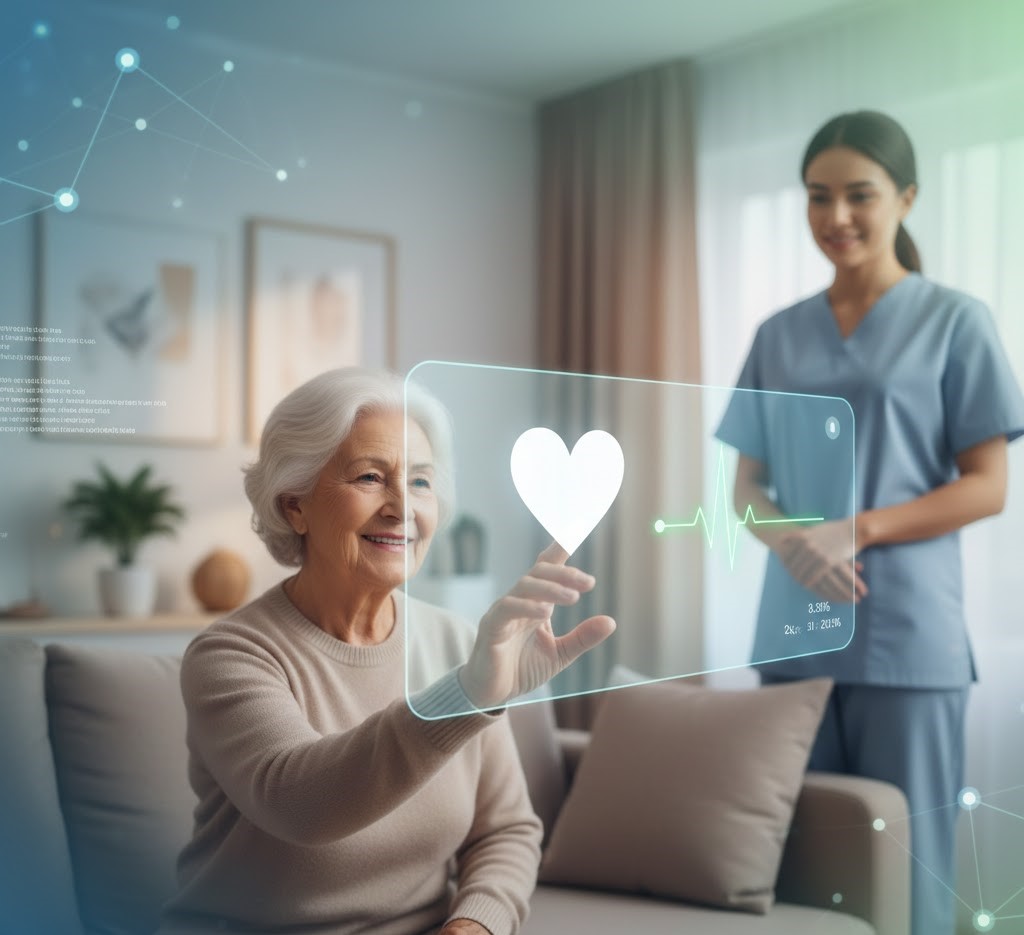
The most significant of all senior care trends is the deep integration of technology, making advanced medical monitoring and virtual visits the standard for home care services. This blend of high tech tools and compassionate human care define modern elder care.
Advanced Remote Patient Monitoring (RPM)
The days of manual check ins alone are fading. Remote patient monitoring services are becoming commonplace, allowing nurses and caregivers to track vital signs, medication adherence, and activity levels in real time. This technology is crucial for managing chronic conditions, providing a safety net that rivals and sometimes exceeds that of a residential facility. If a patient’s glucose levels spike or their heart rate drops, the private home care providers are alerted instantly, allowing for proactive intervention rather than reactive emergency care. Families should look for senior care agencies near me that are actively investing in and implementing these robust RPM services, as they represent the gold standard in safety.
The Evolution of Telehealth
Telehealth has moved beyond simple video calls. The telehealth platforms 2026 introduce are robust, secure, and integrate seamlessly with diagnostic tools. Doctors can conduct thorough virtual exams, review data from remote patient monitoring services, and prescribe or adjust treatments without the logistical stress of transportation. This is particularly vital for elderly patients with mobility challenges or those residing in rural areas. The focus is shifting towards 'tele mentoring' where remote specialists guide on site private home care providers through complex medical procedures, ensuring expert care is always available.
The Role of AI and Predictive Analytics
A cutting edge development in home care industry trends is the use of Artificial Intelligence (AI). AI models analyze data gathered from remote patient monitoring services to predict potential health crises, such as the likelihood of a fall, a severe infection, or an acute exacerbation of a chronic illness. For example, a sudden, subtle change in sleep patterns or mobility, detectable only by AI, can trigger an early alert, enabling caregivers to intervene before hospitalization is required. This predictive capability is revolutionizing how elder care is administered, ensuring resources are deployed exactly when and where they are needed for most.
Cybersecurity and Data Security
With increased data flow, increased responsibility comes. A key consideration for families choosing telehealth is the security offered by the platform. The best home care agencies' reviews will often highlight providers who demonstrate robust data encryption and compliance, assuring families that sensitive health information is protected according to the highest industry standards.

Trend 2: Financial Accessibility and Provider Transparency
One of the persistent challenges in elder care is cost. 2026 will see an increase in solutions designed to make quality care more financially viable and easier to vet, reflecting significant home care industry trends towards consumer empowerment.
The Rise of Affordable Nursing Care at Home
Historically, skilled nursing care was primarily facility based. However, patient preference and payor models are pushing for the delivery of affordable nursing care at home. Agencies are streamlining operations and utilizing licensed practical nurses (LPNs) and advanced practice registered nurses (APRNs) for high acuity tasks in the home setting, often at a lower cost than a long term care facility. Furthermore, advancements in specialized medical equipment mean procedures once confined to hospitals can now be safely managed in the home. This makes high quality home care services a realistic alternative for more families.
Transition to Value Based Care Models
A major financial shift is the move away from the traditional fee for service model towards Value Based Care (VBC). Under VBC, private home care providers and senior care agencies near me are reimbursed based on patient outcomes, rather than the volume of services provided. This incentivizes agencies to invest in preventative care, effective remote patient monitoring services, and robust caregiver support, ultimately leading to higher quality and more sustainable elder care. Families should inquire if prospective agencies participate in VBC arrangements, as this often signals a strong commitment to long term health and efficiency.
Consumer Driven Research and Transparency
The search for senior care agencies near me is now highly consumer driven, mirroring other industries. Families are no longer relying solely on referrals. They are actively seeking out best home care agencies reviews, comparing costs, and analyzing service records online. This consumer demand is forcing agencies to adopt better healthcare SEO strategies and focus on patient acquisition online by being transparent about pricing, service schedules, and caregiver qualifications. The digital reputation of private home care providers is now their most asset, making digital presence a key element of modern care delivery.
Comparison of Care Models (2026 Focus)
|
Feature |
High Tech Home Care |
Traditional Nursing Facility |
|
Location |
Client's Home |
Institutional Setting |
|
Privacy |
High Degree of Personal Privacy |
Limited |
|
Technology |
Remote Patient Monitoring Services, Advanced Telehealth Platforms |
Limited/Centralized Monitoring |
|
Cost Model |
Flexible, increasingly Value Based |
Typically, high fixed daily cost |
|
Key Advantage |
Personalized environment, immediate family involvement |
All day clinical presence, regulated structure |
Trend 3: Prioritizing Caregiver Support and Resilience
The backbone of all home care services is the caregiver, often a family member or dedicated professional. Recognizing the severe impact of stress, a major senior care trend for 2026 is the formal, mandated integration of support systems.
Addressing Caregiver Burnout Solutions
Caregiver burnout solutions are moving from simple advice to structured, funded programs. Agencies and health systems are starting to realize that supporting family caregiving resources is an investment that prevents costly patient readmissions and improves elder care outcomes. This includes offering more flexible and affordable respite care options, professional counseling access provided through telehealth platforms, and technology driven scheduling assistance to prevent overscheduling. The best private home care providers are now offering mandatory respite hours for family caregivers, recognizing that their wellbeing is critical to the entire care ecosystem. When searching for senior care agencies near me, families should specifically ask what concrete caregiver support programs are offered to the primary family caregiver, going beyond simple resource pamphlets.
Formalizing Family Caregiving Resources
The complexity of home care managing insurance, coordinating appointments, and applying for benefits often overwhelms families. 2026 will see a rise in centralized family caregiving resources, including specialized navigators or social workers employed by senior care agencies near me to guide families through administrative mazes. These resources are designed to reduce the administrative load, allowing family members to focus on emotional support rather than bureaucracy. This standardization of support is a vital home care industry trend that reduces strain on families seeking affordable nursing care at home.
Standardization and Specialization in Training
As home care takes on more clinical complexity, professional training must follow suit. Agencies are investing heavily in standardized, accredited training for specialized services like advanced wound care, IV management, and complex medication administration all essential components of modern affordable nursing care at home. This specialization ensures that complex medical needs can be met safely and competently in the home, further cementing the home as the preferred setting for elder care. When reviewing best home care agencies reviews, look for evidence of continuous professional development and high staff retention rates, as these metrics directly correlate with quality of care. This focus on expertise is a key part of healthcare SEO strategies, attracting families looking for high level care.
Conclusion: Preparing Your Family for Tomorrow's Elder Care
The future of senior care in 2026 is brighter, more connected, and centered firmly on the home. The fusion of high tech tools like telehealth platforms 2026 and sophisticated remote patient monitoring services with high touch, human compassion is setting a new standard for elder care. By embracing these advancements, utilizing formal family caregiving resources, and diligently researching private home care providers based on best home care agencies reviews, families can secure the highest level of care. Understanding these key home care industry trends ensures that you are not just reacting to care needs, but proactively designing a supportive, safe, and sustainable environment for your loved one. The commitment to transparent service and quality defines the successful patient acquisition online strategy for providers and the optimal choice for families.
 Perplexity
 Claude
 Grok
Grok