
















Section 1: Overview
The future of the home care industry stands at a transformative intersection of demographic reality and technological innovation. As we move further into 2026, the sector is no longer defined merely by basic companionship or medical assistance. It is evolving into a sophisticated, data driven ecosystem. This evolution is being propelled by the Silver Tsunami about the unprecedented rise in the aging population coupled with a critical, ongoing labor shortage that forces the industry to innovate to maintain the quality of life for our seniors. You can track national labor trends via the Bureau of Labor Statistics to understand the broader market context of employment in health services.
The future of home care is effectively a shift from a reactive model to a proactive, predictive one. Historically, care was delivered only after an incident, such as a fall or a health decline. The future, however, leverages remote monitoring, artificial intelligence, and smart home integration to anticipate needs before they become emergencies. For the latest innovations in this space, check out the FindCarez Industry News.
The industry is currently facing a perfect storm of rising wage inflation, higher expectations for quality of care, and a shrinking pool of available talent. To survive and thrive, the industry is looking toward systemic efficiencies streamlining administrative burdens through digital tools, enhancing caregiver retention through better training and technology, and empowering families with more transparent, real time data.
Market Drivers and Strategic Outlook
|
Key Driver |
Future Trend |
Impact Level |
Planning Priority |
Long term Outlook |
|
Demographic Shift |
Hyper Personalization |
Critical |
High |
Massive growth in demand |
|
Technology |
AI Driven Monitoring |
Very High |
Critical |
Standardized baseline |
|
Labor Market |
Hybrid Staffing Models |
High |
High |
Increased retention focus |
|
Regulatory |
Data Transparency |
Medium |
Medium |
Strict accountability |
|
Economic |
Value Based Billing |
High |
High |
Cost efficiency focus |
Section 2: Types of Senior Care
The categorization of senior care is becoming more nuanced as the industry matures. As we look at the future of home care, the distinction between general support and clinical intervention is blurring due to better technology. Explore the full spectrum of in home care services to see how these categories overlap in modern practice.
Tech Enabled Companion Care
This sector is evolving to include digital connectivity. Future companions will be tech literate, helping seniors navigate digital social tools to combat isolation, which is a major factor in overall physical health.
Advanced Personal Care
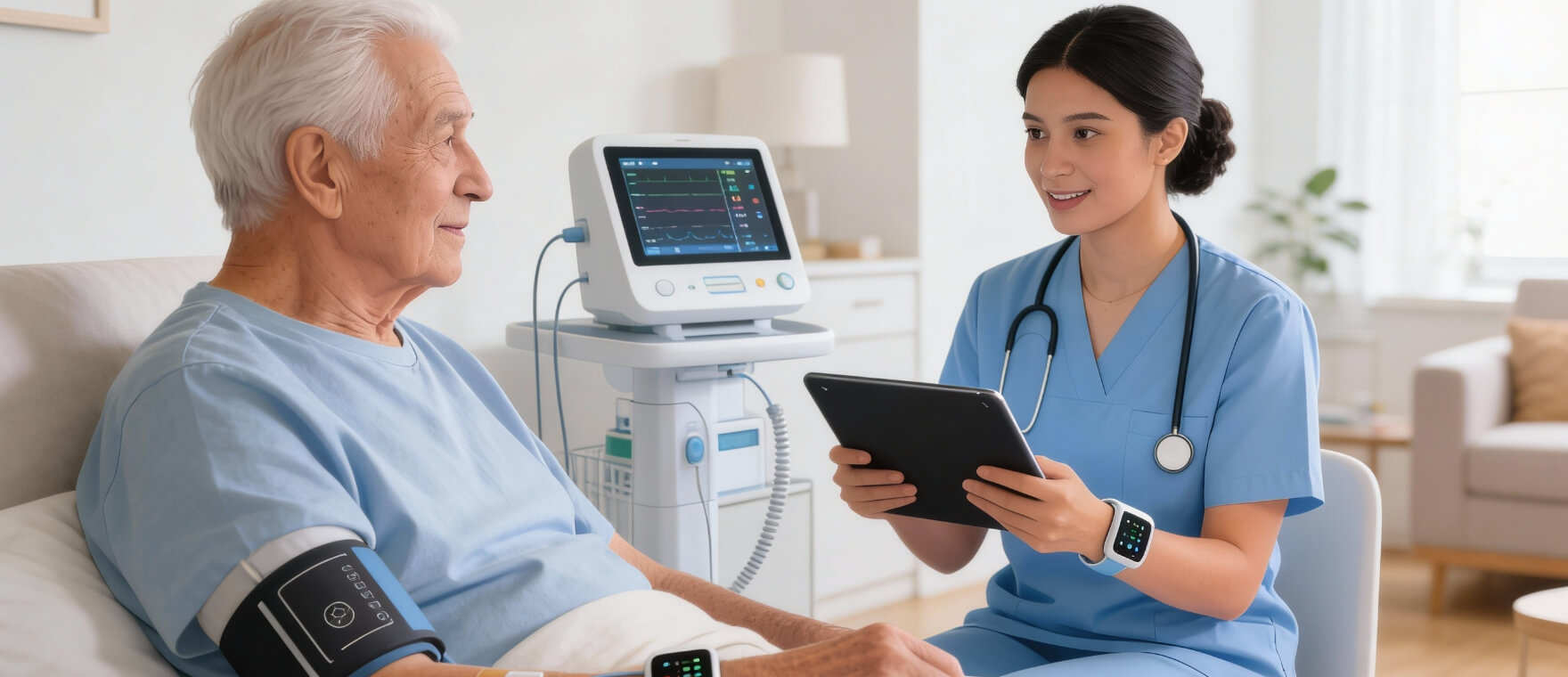
While centered on Activities of Daily Living, the future lies in smart care. Learn more about Personal Care standards and how they are becoming data informed. Caregivers now use tablets to track vitals, medication adherence, and changes in mood, providing a comprehensive overview of family members and doctors.
Specialized Dementia and Memory Care
The future focus is on environmental adaptation. Review the specialized programs used to manage cognitive confusion within the home. This includes sensors that alert caregivers if a senior wanders outside at night or fails to move for an extended period.
Clinical and Skilled Nursing
As healthcare decentralizes, more complex treatments are shifting to the home. This requires professionals with advanced skilled nursing certifications. Wound care, post surgical recovery, and chronic disease management are now performed with hospital grade equipment within the residential setting.
Comparative Analysis of Care Models
|
Care Model |
Staffing Intensity |
Tech Integration Level |
Primary Focus |
Best Suited For |
|
Companion Care |
Low |
Moderate |
Social/Wellness |
Early stage aging |
|
Personal Care |
Moderate |
High |
ADLs/Vitals |
Chronic needs |
|
Memory Care |
Very High |
Very High |
Safety/Cognition |
Cognitive decline |
|
Skilled Nursing |
High |
High |
Clinical/Medical |
Post hospitalization |
|
Hybrid Care |
Medium |
High |
Comprehensive |
Dynamic health states |
Section 3: Cost of Senior Care
The economic model of home care is undergoing significant pressure. Families can no longer view the cost of care as a static expense. It is a dynamic budget item that requires long term planning. Utilizing financial planning tools to project care costs against assets is more critical than ever.
The future cost structure will likely include a mix of traditional hourly billing and subscription based models for Smart Home Care monitoring services. For a breakdown of current market rates and affordability, visit the FindCarez Cost of Care Guide.
Financial Planning Considerations
|
Cost Component |
Pricing Influence |
Annual Trend |
Planning Strategy |
|
Labor Wages |
High |
Rising steadily |
Increase 5% budget buffer |
|
Benefits/Training |
Moderate |
Increasing due to demand |
Factor in staff turnover |
|
Monitoring Tech |
Low |
Decreasing as it scales |
Subscription model planning |
|
Admin Overhead |
Medium |
Efficiency driven |
Seek tech ready agencies |
|
Regulatory Fees |
Low |
Consistent |
Audit compliance yearly |
Section 4: How to Choose a Home Care Agency
In the future of home care, the best agency is the one that acts as a technology partner. When vetting into a future ready agency, families must look beyond the basic licensing requirements.
Vetting Checklist for Modern Agencies
-
Data Transparency: Does the agency use Electronic Visit Verification? Transparency is the new standard of care. Families should have access to a portal that shows exactly when a caregiver arrives and leaves.
-
Staff Retention and Training: A high performing agency in 2026 invests in ongoing certification programs for its staff. High turnover rates are a red flag.
-
Emergency Preparedness: High tech agencies use algorithmic scheduling to ensure shifts are covered immediately. Ask what their fill rate is when a primary caregiver calls out sick.
-
Cultural and Personal Fit: Ensure the agency uses a sophisticated matching process. For insights into the business side, which can reveal how well managed an agency is, refer to resources like Urblytica business formation.
Agency Quality Metrics
|
Metric |
Goal |
Why it Matters |
|
Caregiver Retention Rate |
> 75% |
Indicates professional treatment and stability |
|
Technology Maturity |
High |
Ensures real time communication |
|
Family Portal Access |
Available |
Essential for remote monitoring |
|
Certification Level |
Advanced |
Correlates with better medical outcomes |
|
Shift Fill Rate |
> 95% |
Guarantees consistent care delivery |
Section 5: Local Resources
The future of resource navigation lies in the centralization of information. The Bureau of Labor Statistics remains the foundation for understanding wage trends, but for families, the new gold standard is the local Area Agency on Aging digital portal.
It is also crucial to leverage industry portals that aggregate data. Resources like FindCarez are essential for finding specialized providers who are early adopters of new care methodologies. You can also explore state funded programs that are being updated to include digital health support.
Resource Navigational Strategy
|
Resource Type |
Benefit |
How to Access |
|
Area Agency on Aging |
Local waivers and grants |
State government websites |
|
Industry Portals |
Comparative data |
FindCarez directory |
|
Labor Boards |
Wage benchmarks |
Government labor offices |
|
Elder Law Attorneys |
Asset protection |
Local legal associations |
|
Health Systems |
Clinical coordination |
Hospital network referrals |
Section 6: Find Caregivers
Identifying the right caregiver is evolving into a blend of human intuition and algorithmic precision. There are three primary channels for finding caregivers:
-
Tech Driven Agencies: These remain the gold standard for security and now use AI driven matching algorithms to pair caregivers with seniors based on personality, skills, and even location convenience.
-
Registries: These offer a database of professionals. In the future, registries will include verified, blockchain backed professional profiles.
-
Digital Platforms: The fastest growing sector. Use caregiver search tools to filter candidates by advanced criteria, including experience with medication management.
Conclusion
The future of the home care industry is not merely about finding a pair of hands; it is about building a secure, intelligent, and human centric infrastructure for aging. By taking a proactive approach to valuing transparency, investing in the right partnerships via FindCarez, and staying informed families can navigate this evolving landscape to ensure their loved ones receive the care they deserve. The future belongs to those who view care as a dynamic, evolving commitment to quality of life.
Section 7: FAQ for the Future of Home Care Industry
1. How will AI actually change my loved one's day to day care routine?
AI is shifting care from a reactive model to a proactive one. Instead of relying on a phone call after a health event, smart home sensors can now track movement patterns and health vitals in the background. This allows caregivers to see subtle changes like a decline in gait or changes in sleep quality and intervene before a major fall or health crisis occurs.
2. Should I wait for home care technology to become cheaper or more advanced before hiring?
No. Care needs rarely wait for market tech cycles to settle. The best strategy is to start your care plan now with an agency that is already an early adopter of digital tools. Technology is an additive layer to human care, not a replacement; you can always upgrade the specific tech solutions used in the home as the market evolves.
3. How can I ensure my loved one’s data privacy if we use smart home monitoring?
Prioritize agencies that provide a written, HIPAA compliant policy. Ask them specifically where the data is stored, who has access to the raw metrics, and how the agency handles the off switch if your loved one wishes to disable monitoring in private areas like the bathroom or bedroom.
4. How do I build a care team that can survive current labor shortages?
Stop relying on a single preferred caregiver. Build a primary and secondary roster. When vetting an agency, ask about their fill rate how often they cover shifts when a primary aide is out. Agencies that use algorithmic scheduling are often better equipped to manage these gaps than smaller, manual scheduling providers.
5. Is the move toward value based care in home care going to make my out of pocket costs go up?
It may change the structure of your costs rather than just raising them. Under value based models, you are paying for health outcomes like preventing readmission to a hospital rather than just hours on the clock. While upfront costs can be higher, they often lead to long term savings by reducing expensive hospitalizations.
6. What is the difference between an agency and an independent hire in this new tech heavy era?
Agencies provide the technology infrastructure like family portals, EHR access, and automated shift filling that independent hires usually lack. Independent hires may be cheaper hourly, but they lack the backup and technical oversight that modern care demands.
7. How does remote monitoring assist a live caregiver?
It provides them with data driven insights. Instead of guessing if a senior is dehydrated or restless, the caregiver sees the actual metrics from smart sensors, allowing them to provide precise assistance.
8. Are state funded programs keeping up with these technological trends?
Many states are actively updating their Medicaid waiver requirements to include coverage for assistive technology and remote monitoring because it reduces the overall burden on the state's healthcare system.
9. Can I use my own smart home devices with professional care services?
Often, yes. Many agencies can integrate data from standard devices but always confirm compatibility with their central dashboard to avoid data silos.
10. Why is the industry moving toward subscription models for monitoring?
Hardware becomes obsolete, but software improves over time. Subscription models allow agencies to constantly update the AI driven analysis of your loved one’s data, ensuring the monitoring remains relevant to their changing health status.
Section 8: PAA for the Future of Home Care Industry
1. How do I tell if an agency is truly tech ready or just using basic software?
Ask to see their family portal. If they can only show you an invoice, they are not tech ready. A truly integrated agency will provide a portal where you can see daily care notes, real time medication tracking, and upcoming schedule changes.
2. Should I hire independent caregivers to save money, or stick to a tech enabled agency?
It depends on your appetite for risk. Agencies handle the administrative heavy lifting taxes, background checks, training, and, crucially, providing a substitute if a caregiver calls in sick. If you hire independently, you are responsible for finding that replacement when a crisis occurs, which can be difficult during labor shortages.
3. How do I prepare for a 5 10% annual increase in care costs?
Factor this into your financial planning now. Treat home care as a dynamic budget line item, not a fixed expense. Speak with an elder law attorney about asset protection strategies that can help preserve your family's savings while utilizing local state funded programs to offset rising costs.
4. What is the invisible tech I should look for in 2026?
Invisible tech refers to passive sensors like floor pressure mats or ambient light trackers that monitor safety without requiring your loved one to wear a bracelet or press a button. This is ideal for seniors who are resistant to being monitored or those with early stage cognitive decline.
5. Where can I find agencies that prioritize both high tech and high touch care?
Start by visiting local FindCarez directories and filtering agencies that list smart home integration as a service feature. Ask them during the discovery call to describe their specific digital toolkit and how it enhances the quality of daily care.
 Perplexity
 Claude
 Grok
Grok